“A lot is happening in Flanders in the field of battery systems, which I find an interesting observation.”
30/10/2025
The six modules of the Battery Systems course cover both the theoretical and practical aspects of battery systems. Special attention is paid to mobile applications, such as electric vehicles and stationary applications, e.g. energy storage systems. Jochen Dewaele, Energy Systems Project Manager at SPIE Belgium, took the course. ‘My general knowledge of the field has been broadened.’
How was the Battery Systems course valuable to you?
Jochen Dewaele: "I found it enriching. For me, it was primarily a refresher course on energy systems. That's why I enrolled. The course also gave me an insight into the various applications of batteries. But what I found most interesting was the discovery that a lot is happening in Flanders in the field of battery systems. When it comes to batteries, people always talk about China, which is, of course, miles ahead of us. But it's fascinating to see that things are also happening here."
Is a course like this important to you in the context of lifelong learning?
'Yes. Technology is developing very rapidly, especially in the field of battery systems. An application that has been around for a year is already old. Did I have any “aha” moments during the course? I work on the contractor side and don't have a very good understanding of the financial side of things. Why would anyone invest in battery systems? Thanks to the story of someone from Yuso (specialist in battery storage – ed.), I understand the revenue model of such a large-scale system. I also found it fascinating to see the structure of a battery cell. That happened during our company visit to EnergyVille (institute for research into sustainable energy and intelligent energy systems – ed.).'
How important were those company visits for you?
'That aspect of the programme will stay with me the most. The theory is necessary, of course. But you forget the theory more quickly if you don't see it in practice. It's nice to actually see something happening and not just study graphs and numbers. You also see that mix of theory and practice among the lecturers: there are both scientists and people from the business world.'
Did the programme help you make new contacts?
'I now have a better understanding of which companies are active in the sector and have made the necessary contacts within those companies. I also got to know the other students. They were a fairly diverse group, which made for lively discussions during the breaks.'
Did you gain insights from the course that help you in your daily work?
'My general knowledge of the field has broadened. For example, I can now situate certain companies much better. And I can answer questions that I didn't know the answer to before. For example, someone asked me what happens to broken batteries. I told that person what I had learned about battery recycling. Another customer was looking for a solution for small-scale battery storage, while we focus on large-scale applications. I was able to refer that customer to suppliers of second-hand batteries that I know, thanks to the course.'
Do you see any areas for improvement that would make the course even stronger?
'I am, of course, somewhat biased because I work in that sector, but I think there should be more attention paid to large-scale battery systems.’ (laughs)
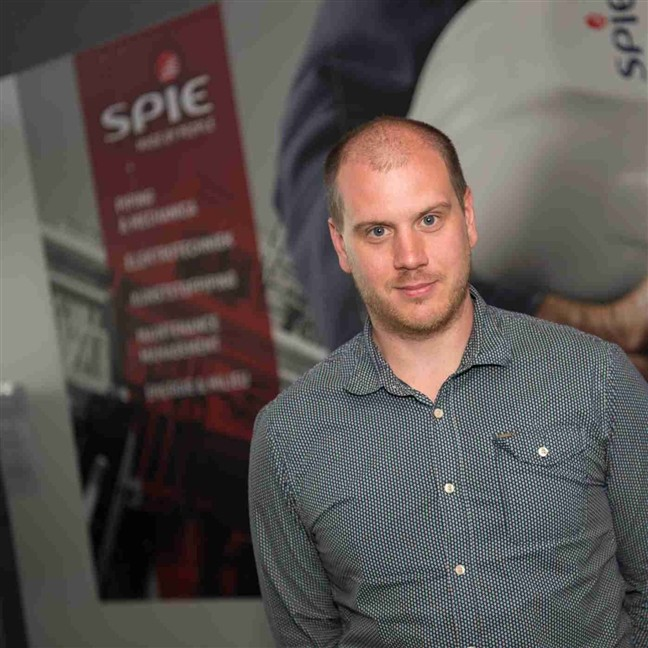
Jochen Dewaele, Project Manager Energy Systems at SPIE Belgium
Battery Systems
This programme focuses on both the theoretical and practical aspects of battery systems, with a special emphasis on two key application domains: mobile applications, such as electric vehicles, and stationary applications, including grid-connected electrical energy storage systems. The programme’s format provides a blend of lectures by experts and use cases from industry, combined with visits to various companies across Flanders.
Gerelateerde opleidingen