Saskia Walraedt (essenscia): "I think there is unjustified plastic bashing in today’s society”
28/04/2023
Saskia Walraedt is director of essenscia PolyMatters, the division within the federation that acts on behalf of the plastics sector. She is one of the voices from the field supporting the postgraduate programme Sustainable Polymers in a Circular Economy. Essenscia PolyMatters represents polymer producers, companies that make plastic objects, masterbatch producers and recyclers, all together a large part of the plastics sector's value chain. The division PolyMatters focuses on construction and packaging, as well as circular economy since plastics and polymers are at the heart of the new European legislation.
Leading the charge for Sustainable Polymers
Saskia Walraedt, director of essenscia PolyMatters is passionate about the plastics industry and convinced of the value of polymers. “If I can help make our industry more future-proof, I am happy to back a project such as the postgraduate programme Sustainable polymers in a circular economy. That is the role of a federation, to support our members any way possible. Lifelong learning is an important part of this. We must evolve to become and to stay relevant in today’s rapidly changing world.”
Essenscia's point of view on Circular Economy and Sustainability
For essenscia, the definition of a circular economy is as described at a European level in the Taxonomy Regulation: Keeping materials in the economy for as long as possible at the highest possible value. This can be done in numerous ways and is about more than just recycling. It is also about making materials last longer, switching from fossile resources to alternative sources, using reusable materials, increasing resource efficiency and implementing other business models. "To us, it is important that the material is circular and not necessarily the object," explains Saskia Walraedt. "We are against the dogmatic thinking that a bottle must be recycled to be a bottle. If the material is used in a high-quality way, it might as well be in another application. But closing that cycle is not always simple and there are often legal restrictions that stand in our way ."
Sustainability Beyond Environmental Factors: an integrated approach
Sustainability is a broad term that goes far beyond environmental aspects. Primarily, materials must be produced in an environmentally friendly way, considering resource efficiency and energy efficiency, as well as production processes.
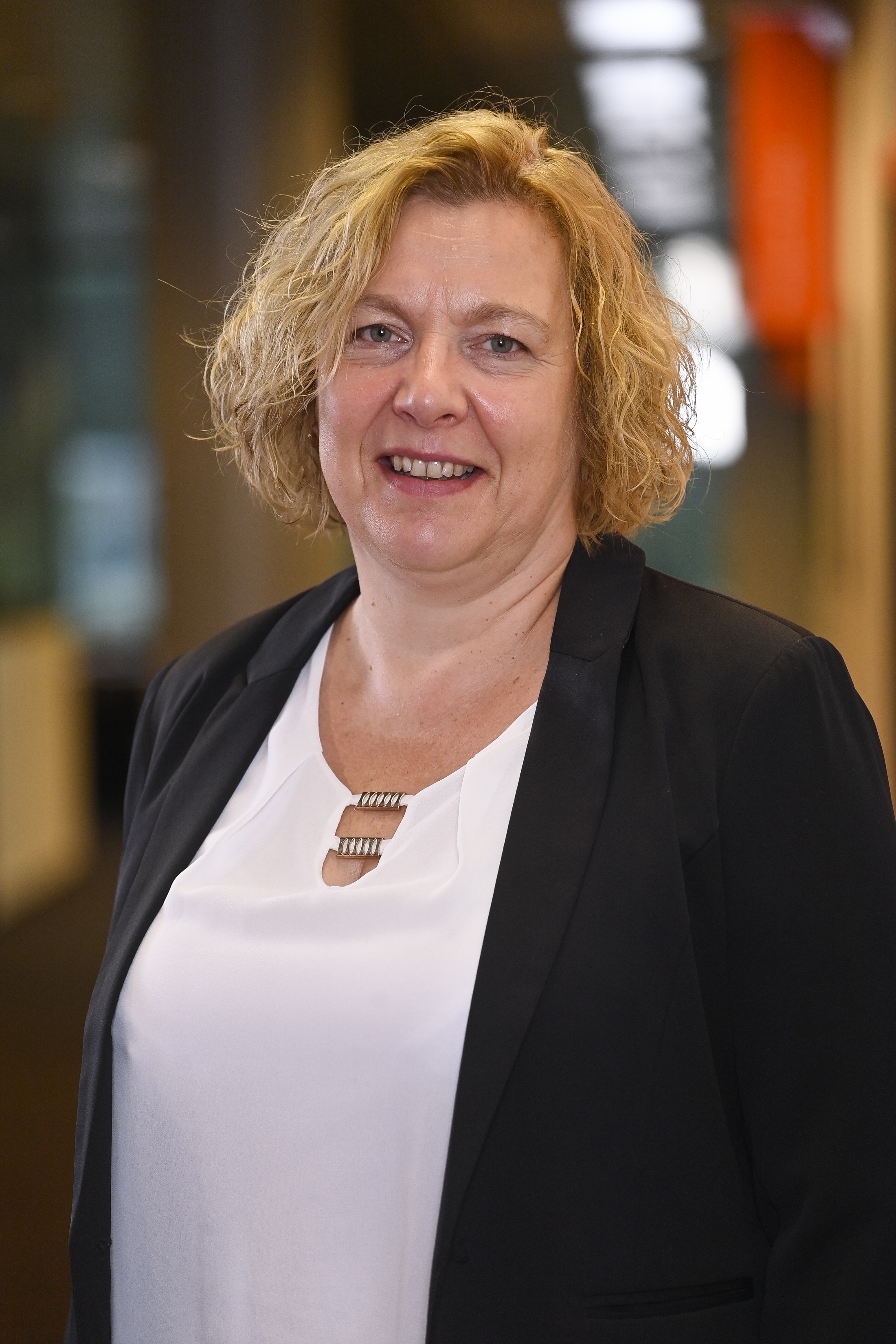
Saskia Walraedt, director of essenscia PolyMatters
"You can have a very sustainable polymer, but if it is used in an application that is not sustainable, that is combined with other materials in such a way that it is poorly dismantlable, the product cannot be recycled at the end of its life. It might be a sustainable polymer, but it is not a sustainable application," Saskia tells us.
The example Saskia gives is plastic packaging being replaced by laminated paper. The use of plastics is drastically reduced, but it is not necessarily sustainable. Plastic packaging today can be sorted, recycled, and processed. "Laminated paper cannot be properly processed with other paper nor with other plastics. By combining them, you render the product unsustainable. There is little point talking about sustainable polymers if you don't see it in its end application."
Finding the middle ground
"I think there is unjustified plastic bashing in today’s society. Look at what the world would be like without plastics, there wouldn’t be much left. I advocate taking a scientific approach to plastics and to start weighing up the pros and cons. That way, we don't replace plastics with materials that end up being less sustainable in the future.”
We shouldn’t forget that plastics were introduced as a sustainable alternative to more problematic materials. Lead water pipes or ivory billiard balls were replaced by polymers. "Cotton, for example, is a product that is very agriculture-intensive. It uses a lot of water and pesticides, which creates a high environmental impact. On top of that we are facing massive population growth. Everyone needs clothes and that weighs enormously on agriculture. So, we started using polyester and other polymers to create alternative fabrics. Society easily forgets all the benefits of plastics and that is problematic, not the material itself. That doesn’t mean we ignore the issue of littering, but this is material independent and a behavioural issue more than anything else.”
Want to know more?
Essenscia invests a great deal in its members and trainings, often in cooperation with universities such as KU Leuven. The postgraduate programme Sustainable polymers in a circular economy is a perfect example of that. The programme offers a broad theoretical base, filled with practical cases, and helps navigate the participants through a jungle of legislation and products.
Want to know more about the postgraduate certificate Sustainable polymers in a circular economy?
This new postgraduate programme offers you solid academic and applied interdisciplinary knowledge in the circular design, application and (re)processing of sustainable polymer materials and products.
Read more about the programme or contact programme coordinator Céline Platteau.
Gerelateerde opleidingen